Image
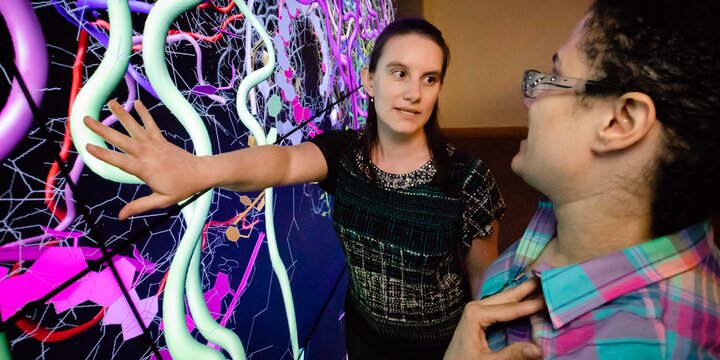
lab group photo

The Psychology Department offers undergraduates many opportunities to engage in research. Each semester, over 300 students work in research labs and earn college credit.

Title
Types of Undergraduate Research
Body

PSYC 290 Research Experience

PSYC 290 Research Experience is for the Casual Researcher who just needs some elective hours, or for the Exploring/Determined Researcher wanting to explore pursuing a research career, including applying to grad school, PSYC 290 is the starting point. More information about PSYC 290.

PSYC 494 Advanced Research

PSYC 494 is the next step after PSYC 290 for undergraduates who want more research experience. In PSYC 494 Advanced Research, students take on more responsibility in the lab, and it requires submitting a paper at the end of the semester. More information about PSYC 494.

Honors Program

The Honors Program is a three-semester sequence of courses, taken along with PSYC 494, offers undergraduates an opportunity to create scholarly work on a specific research project, culminating in a bachelor's thesis. More information about the Honors Program.

Capstone Program

The Capstone Program two-semester sequence of courses, taken along with PSYC 494, offers undergraduates an opportunity to write a bachelor's thesis with the support of faculty mentors. More information about the Capstone Program.
Apply for an Undergraduate Research Scholarship in Psychological Science

The goal of this program is to enable research opportunities for students who face financial and time constraints that otherwise prevent them from participating in research. More information about the application process.

 
Additional Undergraduate Awards & Scholarships
 
For information about additional funding opportunities for undergraduate research, please see https://psychology.illinois.edu/academics/undergraduate-programs/undergraduate-awards-scholarships
Block Reference

Featured Research Opportunity

Image “Visual Semantics”; asks how objects’ occurrences in similar scenes contribute to object category knowledge. An infant wearing a head-mounted camera illustrates visual input. A sequence of kitchen-counter images shows object segmentation of a fruit plate from the background, with toys and a coffee maker present. The segmented fruit is labeled “food” to illustrate category labeling, and the bananas “banana” to illustrate subcategory labeling. An illustration for the emergence of conceptual knowledge.
The project investigates how humans learn semantic categories (e.g., food, strawberry, appliance, fridge) from visual experience. Drawing inspiration from distributional approaches to language learning, we examine how objects tend to occur in the naturalistic, first-person experience of infants. The long-term goal is to better understand the ways in which everyday visual input contributes to the emergence of structured conceptual knowledge. Undergraduate research assistants will work in the lab on image labeling, helping build large, carefully curated datasets of object categorization....