Student Research Opportunities
Biography
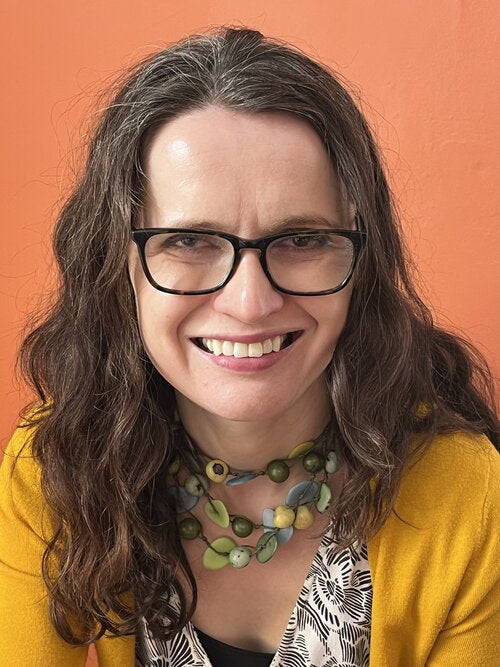
I graduated from the University of Pittsburgh in 2015 with a PhD in Clinical and Health Psychology and a predoctoral fellowship in biostatistics. My work takes a transdisciplinary approach to addiction science, integrating methods from social psychology, cognitive neuroscience, and data science to better understand substance use disorder etiology and treatment. In my years as a faculty member, my work has increasingly moved to the intersection of addiction and computer science, integrating machine learning and AI-based tools for measuring alcohol consumption and exploring novel contextualized addiction interventions. In recognition of my research, I was named a Rising Star by the Association for Psychological Science, a Lincoln Excellence Assistant Professor at the University of Illinois, and was the 2020 recipient of the Early Career Investigator award from the Research Society on Alcohol. I have also built my program of work while managing a major visual disability, an element I share in hopes of developing a sense of possibility and belongingness among trainees from a range of backgrounds.
Research Interests
- Addiction
- Alcohol
- Social processes
Research Description
My work looks at the impact of space and surroundings on substance use. In particular, my work focuses on social and emotional processes driving substance use as well as the application of novel methods and measures within addiction science more broadly. In an expanding line of research I bring this work into the domain of intervention, working towards the development of social-network based alcohol treatment programs that integrate biosensor-enhanced recovery support. Our laboratory student and staff teams span across Champaign-Urbana and downtown Chicago recruitment laboratory locations.
For prospective students:
I do expect to be reviewing doctoral applications in the 2026-2027 admissions cycle. Although there are a variety of opportunities for graduate engagement in my lab, I expect to have particular opportunities for students interested in work at the intersection of addiction and social neuroscience (see EEG hyperscanning trial; collaborator Kara Federmeier) as well as social-network involved alcohol treatments and intervention research. Additional opportunities for graduate engagement include AI and technology-linked interventions and measurement--specifically, wearable alcohol biosensor validation and development (see ongoing trial; collaborator Nigel Bosch) and AI-based tools for contextual assessment (see image-based analysis). Finally, I anticipate expanding our focus in coming years, and students interested in social and contextual factors driving cannabis use are encouraged to apply.
Education
Ph.D., University of Pittsburgh
Additional Campus Affiliations
Professor, Psychology
External Links
Recent Publications
Fairbairn, C. E., & Bosch, N. (2026). Applying Artificial Intelligence to Expand the Measurement Tool Kit in Clinical-Psychological Science: Moving Beyond Self-Reports. Clinical Psychological Science, 14(4), 497-513. https://doi.org/10.1177/21677026251379441
Fairbairn, C. E., Kang, D., Han, J., & Bosch, N. (2026). Objective Assessment in Clinical Psychological Science: Progress in Wearable Alcohol Biosensors. Annual Review of Clinical Psychology, 22(1), 427-453. https://doi.org/10.1146/annurev-clinpsy-061724-080804
Kang, D., Murgia, S., Caumiant, E. P., Lee, Z., Venerable, W. J., Boland, A., Fairbairn, C. E., & Federmeier, K. D. (2026). Exploring neural markers of incentive salience and real-world drinking among individuals with alcohol use disorder. Physiology and Behavior, 310, Article 115290. https://doi.org/10.1016/j.physbeh.2026.115290
Lu, Y., Fairbairn, C. E., Han, J., & Bosch, N. (2026). Mobile Health for Alcohol Use Assessment: Longitudinal Effects of Breathalyzer Self-Monitoring in Everyday Contexts. American Journal of Psychiatry, 183(4), 251-259. https://doi.org/10.1176/appi.ajp.20241170
Metcalf, O., Henry, L. M., Fairbairn, C. E., & Flanagan, J. C. (2026). Digital Technology Prediction of Anger, Aggression, and Violence: Recent Innovations and Methodological Considerations. Journal of interpersonal violence, 41(13-14), 4046-4066. https://doi.org/10.1177/08862605251343199